Category: Kyiv

  • Book Lovers Should Go To Petrivka Book Market In Kyiv

    Book Lovers Should Go To Petrivka Book Market In Kyiv

    Note: While the unjust war in Ukraine rages on, we’re leaving this post here with the sincerest of hopes that peace arrives and this book market will live on and be enjoyed once more. In the meantime, find out about how you can help Ukrainians in Berlin.

    If you’ve been following my blog for a while, you’ll know that I absolutely love to visit bookstores and libraries whenever I travel. From the Instagrammable cultural hotspot, Cărturești Carusel in Bucharest, to the books stuffed in boats at Libreria Acqua Alta in Venice, and a bookstore in Detroit filled with more than 1,000,000 second-hand titles, these are my happy places.

    When visiting Kyiv, a local resident gave me some cool tips about some unusual places to check out, including the Museum of Toilet History, as well as a recommendation to visit Ukraine’s largest book market, the Petrivka Book Market. 

    Book Lovers Should Go To The Petrivka Book Market In Kyiv

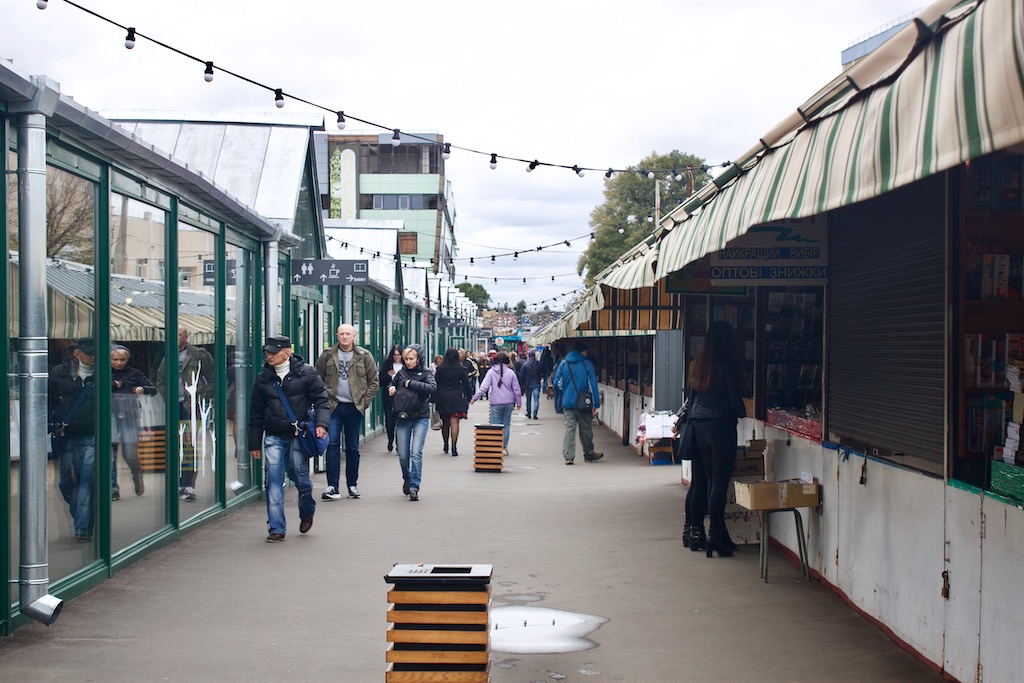
    If you’re looking for a little something off the beaten path to do while you’re in Kyiv, head to the Petrivka Book Market. This gigantic open air market spans 1000 square meters and is filled with more than 100,000 titles, making it Ukraine’s largest book market. Petrivka also happens to be Kyiv’s oldest market.  

    Recommended reading: Find out the best markets to explore in Kyiv for fresh food, vintage clothes, and more and check out this guide to thrifting in Kyiv.

    Aside from books both new and secondhand, you’ll find a bizarre assortment of CDs, DVDs, records, software of dubious origins, party supplies, paint by number sets, and more. 

    While the vastness of the market can seem overwhelming (there’s more than 167 shops, each selling anywhere from 2,000 – 3,000 books), and the rows of bookstalls start to feel the same after a while, it’s a fun way to spend a couple of hours. Especially because Petrivka book market is a place for locals (mostly pensioners) and not tourists! There’s live music, stalls where you could buy coffee, and even cozy nooks where you could sit and relax for a while.

    Most books in Ukraine are actually not sold in retail shops, but in markets like Petrivka where used books remain affordable to the average person. In recent years, the demand for secondhand books has substantially increased as purchasing new books is now considered a luxury buy for many. These markets are not only community institutions, but a vital way to provide literature to Ukrainians at a nominal price.

    There are rumours that the Petrivka book market will be shut down and be replaced by yet another soulless shopping center, so visit this place while it’s still around! Even more sad, is that this appears to be a growing trend – read, Retail Pressures: Ukraine’s Open-Air Bookselling Marketplaces Appear Headed for Closure for more details.

    Watch or share this video about the book market and better yet, subscribe to my Youtube channel for even more travel related videos.

    Would you hang out at the Petrivka book market while you’re in Kyiv? Can you recommend other offbeat attractions in the city? Let us all know by leaving a comment below. 

    Petrivka Book Market Location

    Where is the Petrivka book market? Vulytsya Verbova, 17, Kyiv, Ukraine, 02000.

    Petrivka Book Market FAQ

    What do you need to know before you visit the Petrivka book market in Kyiv? We answer some of the most common questions.

    1) What are the hours of operation? The market is open daily from 9:00 – 17:00. It’s closed on national holidays.

    2) What’s the closest metro station?  The nearest metro station is Pochaina metro station (formerly known as Petrivka) on the Obolonsko–Teremkivska line.

    3) Can you find English books at the Petrivka book market? As this is a market catered to locals and not tourists, most books are in either Ukrainian or Russian. This also means most shop owners do not speak English either. You can still find a small selection of books in English, but you really need to look for them. I picked up a few awesome travel guides to Kyiv, Odesa, and Lviv at a shop called Bookling but found them to be on the expensive side. I may have gotten slapped with a “tourist tax” or English books are a higher price due to their limited availability.

    4) How much time do I need for the market? I’d recommend at least an hour for the book market, and another hour or so for the nearby flea market. Hot tip – check out the flea market for yes, a lot of junk, but also all sorts of treasures.

    5) Is the market safe? Yes. As a woman walking around alone, I never once felt unsafe. People stared at me sometimes, as I definitely looked like a tourist when I was snapping photos, but no one bothered me. Note, I cannot speak about how your experience could be as a person of color at the market, in Kyiv, or while traveling through Ukraine.

    Transportation Options In Kyiv 

    How to get around Kyiv, Ukraine:

    1) To get to Kyiv’s city center, you can take a train, taxi, or bus:

    • From the airports – Kyiv’s primary airport is Kyiv Boryspil Airport (KBP), which is 36 kilometers from the city center. You can take a train from Terminal D, which will take about 40 minutes and bring you to the main metro station, Vokzal. A ticket will cost you 80 UAH. This is the cheapest, quickest, and easiest way to get into Kyiv, as the city is congested with such heavy traffic that bus or car travel is not the most optimal way to travel. If you’re still determined to take a bus, you can take the Sky bus (#322) which runs all day from each of the terminals. The journey will take about an hour or more and bring you to the main station. A bus ticket is 100 UAH. You can also get a taxi from the airport, with prices starting at around 300 UAH. A taxi ride will be about 40 minutes or more. The city also has a second airport, Kyiv Zhuliany Airport (IEV), only eight kilometers from the city center. As it’s so cheap, you might as well take an Uber from the airport to your hotel, hostel, or whatnot. 
    • From the main train station – The city’s main railway station, Kyiv Passazhyrskyi, is located in the heart of the city. Call an Uber to get where you need to go. 
    • From the main bus terminal – The main bus station is at Demiivska Square. It’s not exactly in the city center, but it’s also not that far. Again, we recommend taking an Uber.

    2) There are numerous ways to make your way around Kyiv:

    • Taxis – As taxi scams are plenty, skip taking a taxi. If you don’t speak fluent Ukrainian, they will most certainly pick up on the fact you’re a tourist and charge you exorbitant prices. If you still prefer to take a taxi, popular companies include Uklon, Hopin, and CabLook Taxi. To be on the safe side, have your hotel call them for you versus hailing one yourself, and don’t be hesitant to negotiate the quoted price down.
    • Ridesharing – Both Bolt and Uber are available in Kyiv. Due to having a fractured foot, I used Uber to get around Kyiv throughout my entire time there. It was super cheap and a convenient way to get around the city.
    • Bikes – You can rent bikes when you’re in Kyiv, from sharing services like nextbike. Unless you’re a serious cyclist, we’d advise against cycling your way around the city. It’s not exactly the most bike-friendly city, as the streets are made to serve motorists. Not to mention, the city is very hilly and biking will be a tough effort, to say the least.
    • Public Transit –  You can take the metro, which has three lines and 52 stations. Hours of operation are from 6:00 until midnight daily. One ticket will run you 8 UAH. Kyiv has some of the deepest metro stations in the world and the Soviet architecture in the stations are well worth checking out. You can also travel by bus, trolley bus, or tram, and as with the metro, tickets are 8 UAH each. Note, buses tend to get crowded so it may be best to avoid traveling this way during Coronavirus. If you’re really into having local experiences, you can take privately owned mini buses, called Marshrutky. You can even travel by funicular to get from the upper city down to Podil, or vice versa. The view of the city and the Dnieper during the ride is said to be fantastic. The funicular runs from 6:00 – 23:00 in summer and 7:00 – 22:00 come winter. The cost of a single ticket is 3 UAH. 
    • Driving – If you feel confident enough to drive in Kyiv, (the locals drive a bit like maniacs!), rent a car.

    Where To Stay In Kyiv

    What are some of Kyiv’s best accommodation choices?

    1) Stay in a hotel, hostel, or private apartment while in Kyiv. 

    Booking.com

    2) When I was in Kyiv, I stayed at ibis Kiev City Center. I was lucky enough to score a room on a high floor that offered a spectacular view of Kyiv. While this hotel chain isn’t the style of the hotel I typically choose, the deal was too good to resist costing about €180 for three nights. Aside from that, the hotel’s centrally located, the bed was large and comfy, and the restaurant served up a fairly decent breakfast.   

    Paying For Things In Ukraine

    Tips and tricks to help you handle your money and cards when you’re traveling in Kyiv and beyond:

    1) Ukraine has its own currency, the Ukrainian hryvnia (UAH). 

    • Check xe.com to find out how the local currency fares against the Euro, US dollar, etc.
    • While most places will accept bank or credit cards, smaller shops often only take cash. Get yourself some cash at a local bank machine. Note, many times bank machines are only accessible when banks are open and are closed when the bank closes. Be sure to get your money as early in the day is possible. 
    • If you do pay by card, you’ll be asked which currency you want to pay in – choose to pay in the local currency (RSD), as you’ll save money on the exchange rate.

    2) Ukraine is way cheaper than other destinations in Europe and you’ll find that your money goes a long way here, including your accommodation, eating out, and more.

    3) As always, if you can avoid it, wait to exchange your money somewhere in the city (you’ll find tons of places to do so). The exchange rate at the airport tends to be quite high. 

    Good To Know About Kyiv 

    Important things to know when you’re in Kyiv:

    1) Kyiv is a city full of motorized vehicles. I haven’t visited such a car-crazy city since I visited Bangkok! If you’re getting around by car, which you likely will be at some point, give yourself a long time to get anywhere as you’ll likely get stuck in one or more traffic jams. Take into account the extra travel time when coming from or going to the airport.

    2) A few years ago, a law was passed to enable free data roaming wherever you go in the EU. As Ukraine isn’t part of the EU, you’re either going to need to take advantage of free wifi when you find it, buy a local sim card, or rack up excessive data roaming charges. You can find sim cards at both airports.

    3) If you like traveling in Eastern Europe, you may want to check out some of the blog’s more popular posts:

    *Disclosure – This post contains some affiliate links. If you book a tour or hotel, I’ll earn a tiny commission at no extra cost to you. Thanks for your support!

  • The Kyiv Crematorium, A Socialist Modernist Highlight

    The Kyiv Crematorium, A Socialist Modernist Highlight

    Note: While the unjust war in Ukraine rages on, we’re leaving this post here with the sincerest of hopes that peace arrives and the country can be enjoyed by tourists once more. In the meantime, find out about how you can help Ukrainians in Berlin.

    Over the years, I’ve become very taken with seeking out the more unusual attractions in any given city. The weirder, the better, I say (you can read all about the places I’ve visited in my ongoing weird and offbeat series). 

    So when I traveled to Kyiv, Ukraine, I naturally spent time at some pretty quirky places, like the Museum of Toilet History and Petrivka Book Market. Also on my list was the Kyiv Crematorium, a building with such unique and impressive Soviet-style architecture, that it’s hailed by architects the world over.

    Why You Should Visit The Kyiv Crematorium

    Kyiv Crematorium - Entrance

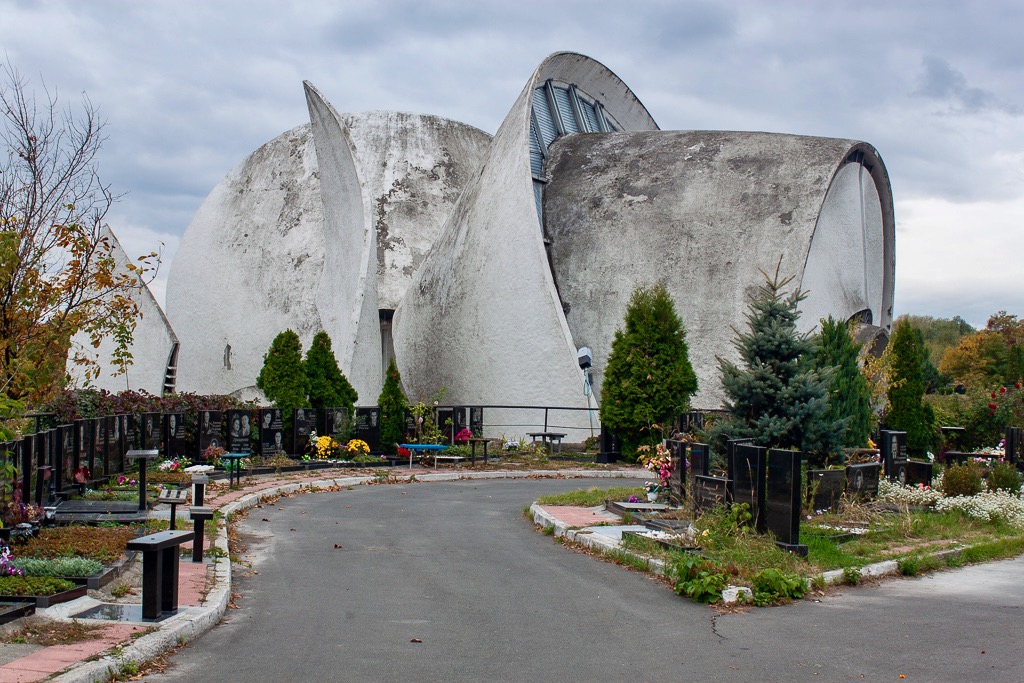
    The Kyiv Crematorium, constructed in 1968, is one of the more distinctive examples of Socialist Modernist architecture that was so prevalent in the former Soviet Union. Located in Baikove Cemetery, the crematorium is part of Memory Park, a creation of the husband and wife artistic duo, Ada Rybachuk and Vladimir Melnichenko, in collaboration with architect Abraham Miletskyj.

    Recommended reading: Read what others have written about the Kyiv Crematorium and Memory Park, including ArchDaily’s Eastern Bloc Architecture: Monumental Museums & Memorials and this detailed article at Socialist Modernism.

    Cremation was a touchy subject during the 1960s, as the horrors of the Second World War and the mass killing of thousands of Ukrainian Jews by Nazis at Babi Yar still loomed largely over the nation. Around this time, public discussion of the Holocaust had just begun. When the idea of the crematorium was first tabled, it was fiercely opposed by the local community. 

    Initially, Miletskyj proposed a design for the crematorium that was said to be very functional. The concept was rejected by the artists, who suggested building something that would avoid a direct association with cremation, especially anything that echoed the mechanical and systematic methods of murder employed by the Germans. They proposed a design that would be more soothing and therapeutic for cemetery visitors, insisting on the creation of a park as opposed to a cemetery where the architecture and surrounding landscape would be a comfort.

    This came to fruition in the white concrete and curving lines of the building that now stands, with an especially noticeable absence of right angles. From the outside, it doesn’t look like a crematorium, but more like a building that wouldn’t be out of place in a dystopian science fiction movie. 

    The building features two symmetrical crematorium halls, known as the Halls of Farewell, each with cupolas resembling flames. The construction of the crematorium was a reflection of a time when artists, engineers, and architects collaborated in a way of “scientifically justified artistic consciousness” and the “Plastic forms of the Halls of Farewell combined a complicated technical process with an avant-garde artistic thinking, dialectically sublating the opposition between technology and humanities, typical of Soviet 1960’s.” (Source.) 

    The artists also started work on a Wall of Remembrance, a labor of love that took a decade to realize. The wall was part of a structure, along with several terraces, to strengthen the small hill where the crematorium is located. The bas-relief sculpture spanning two hundred square meters was covered with various images, some mythological and some depicting post-war reconstruction efforts. At its base, was a tiny artificial lake, providing reflective light for the sculpture. 

    Their work was ultimately quashed by the ruling government in 1982, who ordered it to be covered in concrete saying that it was inconsistent “with the principles of socialist realism”. While many artists around the globe have since offered to pay to remove the concrete so the sculpture could once again be unveiled, Kyiv officials have not taken up anyone on the offer just yet. For now, the concrete wall continues to shroud the work, covered in rather pretty overgrown ivy. 

    The crematorium continues to be quite active today, with 12,000 cremations being conducted annually. The cemetery is also busy with locals visiting their loved ones, leaving fresh flowers by the graves of the old and the young. 

    The Kyiv Crematorium is worth visiting, not only for the architecture, but also for a thoughtful stroll through the cemetery, and the panoramic views over Kyiv from the small hillside complex.

    Watch/share this video about the Kyiv Crematorium and better yet, subscribe to my Youtube channel for even more travel-related videos.

    What do you think about the Kyiv Crematorium? Can you recommend other weird and offbeat attractions in the city? Let our readers know and leave a comment below. 

    Kyiv Crematorium Location

    Just where can you find the Kyiv Crematorium (Memory Park)? It’s situated in Baikove Cemetery at Baikova St, 16, Kyiv, Ukraine, 03039

    Kyiv Crematorium FAQ

    There are some things that you should know before visiting Memory Park. Here are the answers to the most common questions:

    1) What are the hours of operation? You can visit the crematorium anytime, as it’s open daily. Mondays – Thursdays, it’s open from 9:00 – 13:00 and then 13:45 – 18:00. From Friday through Sunday, it’s open from 9:00 – 13:00 and then from 13:45 – 17:00.

    2) What’s the closest metro station? The nearest metro station is Lybidska on the Blue Line.

    3) Do I have to pay to enter the cemetery or check out the crematorium? No, the cemetery is open to the public and there are no fees to visit.

    4) How much time do I need for the crematorium and cemetery? I’d recommend about 30 – 60 minutes to check out the crematorium, take photos, and walk through the cemetery. 

    5) Can I take photos? Yes, of course. However, as it’s a place of mourning, be super respectful and use your best judgment. Funerals are held here and many locals come to visit their loved ones. Don’t disturb them, take your photos quickly and quietly, and then leave. This is not a place for Instagram photo shoots and TikTok-inspired athletic stunts.

    5) Is the crematorium and surrounding cemetery safe? It’s very safe. Some locals gawked at me as I strolled around, but I kept to myself and stayed out of their way. I’d be hesitant to go there at night. Note, I cannot speak about how your experience could be as a person of color in Kyiv, or while traveling through Ukraine.

    Transportation Options In Kyiv 

    There are many many transport options in Kyiv, Ukraine:

    1) To get to Kyiv’s city center, you can choose between a train, taxi, or bus:

    • From the airports – Kyiv’s main airport is Kyiv Boryspil airport (KBP), around 36 kilometers from the city center. You can take a train from Terminal D, which will take about 40 minutes and bring you to the main metro station, Vokzal. A ticket costs 80 UAH. This is the cheapest, quickest, and easiest way to get into Kyiv, as the city is filled with such heavy traffic that bus or car travel isn’t the most optimal way to travel. If you’re still determined to take a bus, you can take the Sky bus (#322) which runs all day from each of the terminals. The journey will take about an hour or more and bring you to the main station. A bus ticket is 100 UAH. You can also take a taxi from the airport, with prices starting around 300 UAH. A taxi ride will be about 40 minutes or more. The city also has a second airport, Kyiv Zhuliany airport (IEV), only eight kilometers from the city center. As it’s so cheap, you might as well take an Uber from the airport to your hotel, hostel, etc. 
    • From the main train station – The city’s main railway station, Kyiv Passazhyrskyi, is located in the heart of the city. Call an Uber to get where you need to go. 
    • From the main bus terminal – The main bus station is at Demiivska Square. It’s not really in the city center, but it’s also not that far. Again, we recommend taking an Uber.

    2) There are numerous ways to make your way around Kyiv:

    • Taxis – As there are many taxi scams out there, avoid taking a taxi. If you don’t speak fluent Ukrainian, they will most certainly note you’re a tourist and charge you exorbitant prices. If you still prefer to take a taxi, popular companies include Uklon, Hopin, and CabLook Taxi. To be on the safe side, have your hotel call them for you versus hailing one yourself, and don’t be hesitant to negotiate the quoted price down.
    • Ridesharing – Both Bolt and Uber are available. It’s a super cheap and convenient way to get around the city.
    • Bikes – You can rent bikes when you’re in Kyiv, from sharing services like nextbike. Unless you’re a serious cyclist, we’d advise against cycling your way around the city. It’s not exactly the most bike-friendly city, as the streets are made to serve motorists. Not to mention, the city is very hilly and biking will be a tough effort, to say the least. 
    • Public Transit –  You can take the metro with three lines and 52 stations. Hours of operation are from 6:00 until midnight daily. One ticket will run you 8 UAH. Kyiv has some of the deepest metro stations in the world, and the Soviet architecture in the stations is well worth checking out. You can also travel by bus, trolley bus, or tram, and as with the metro – tickets are 8 UAH each. Note that buses tend to get crowded, so it may be best to avoid traveling this way during the Coronavirus. If you’re really into having local experiences, you can take privately owned minibusses, Marshrutky. You can even travel by funicular from the upper city down to Podil, or vice versa. The view of the city and the Dnieper during the ride is fantastic. The funicular runs from 6:00 – 23:00 in summer and 7:00 – 22:00 in winter. The cost of a ticket is 3 UAH. 
    • Driving– Rent a car if you feel confident enough to drive in Kyiv (the locals drive a bit like maniacs!).

    Where To Stay In Kyiv

    What are some of Kyiv’s best accommodation choices?

    1) Make a reservation for your Kyiv accommodation: 

    Booking.com

    2) While in Kyiv, I stayed at ibis Kiev City Center. I had a room on a high floor offering jaw-dropping views of Kyiv. I nabbed a good deal, paying about €180 for three nights. The hotel’s centrally located, the bed was large and comfy, and the restaurant served up a fairly decent breakfast. I’d suggest skipping other meals there and heading into the city for more yummy options.  

    Paying For Things In Ukraine

    Tips and tricks to help you manage your money and cards when you’re traveling in Kyiv and other places in the country:

    1) Ukraine has its own currency, the Ukrainian hryvnia (UAH). 

    • See xe.com to find out how the local currency compares to the Euro, US dollar, etc.
    • Many places accept bank or credit cards, but some smaller shops often only take cash. Grab some moula at a local bank machine. Note, many times bank machines are only accessible when banks are open. To avoid any issues, get your money as early in the day is possible. 
    • If you do pay by card, you’ll be asked which currency you want to pay in – choose to pay in the local currency (RSD), as you’ll save money on the exchange rate.

    2) Ukraine is much more affordable than other destinations in Europe and you’ll find that your money goes a long way here, including your accommodation, eating out, and more.

    3) If you can avoid it, exchange your money in the city, as the exchange rate at the airport tends to be quite high. 

    Good To Know About Kyiv 

    Important things to know when you’re spending time in Kyiv:

    1) Kyiv is a city packed full of cars and it’s not unlikely that you will find yourself in a traffic jam time and time again. If you’re getting around by car, give yourself time to get places, especially traveling to or coming from the airport.

    2) Since Ukraine isn’t part of the EU, you will incur data roaming changes when visiting the country. We advise you, to take advantage of free wifi or buy a local sim card. You can find sim cards at both of the city’s airports.

    3) If you’re a fan of Eastern Europe, read some of my posts about some unique places you can visit in Czechia, Hungary, and Serbia:

    *Disclosure – This post contains some affiliate links. If you book a tour or hotel, I’ll earn a tiny commission at no extra cost to you. Thanks for your support!

  • Get Flushed At The Museum Of Toilet History Kyiv

    Get Flushed At The Museum Of Toilet History Kyiv

    Note: While the unjust war in Ukraine rages on, we’re leaving this post here with the sincerest of hopes that peace arrives and this museum will live on and be enjoyed once more. In the meantime, find out about how you can help Ukrainians in Berlin.

    Recently when writing about the statue of a peeing boy in Helsinki, I pondered whether or not Europe has a highly unusual curiosity towards public urination. Well, it turns out they have a fascination with toilets too, and at the Museum of Toilet History in Kyiv, you can learn all about toilets throughout the ages and even, see some reconstructed examples.

    Toilets Throughout The Ages At The Museum Of Toilet History

    As the name implies, the Museum Of Toilet History examines the history of toilets from Primitive Society, Antiquity, the Middle Ages, the Renaissance, the 17th – 20th centuries, all the way to Modernity. Further featured in the museum are toilet-inspired pieces of art and the largest collection of toilet-themed souvenirs in the world (with more than 600 pieces!). The museum even nabbed recognition from the Guinness World Records for that unique claim to fame.

    The Museum of Toilet History is set in the 19th-century Kyiv Fortress and was founded in 2006 by a Ukrainian couple, Nikolay and Marina Bogdanenko. The couple, who used to work in the plumbing industry, decided to start the museum and fill it with items they’d collected from their various trips around the world. In 2013, the duo even published a 521-page book called, World History of Toilets.

    Who would visit such a museum, other than people like me who love all things weird and offbeat? Well, plenty of people visit this curious little location, as the museum attracts more than 1,000 visitors per month.

    The Evolution Of Toilets At The Museum Of Toilet History

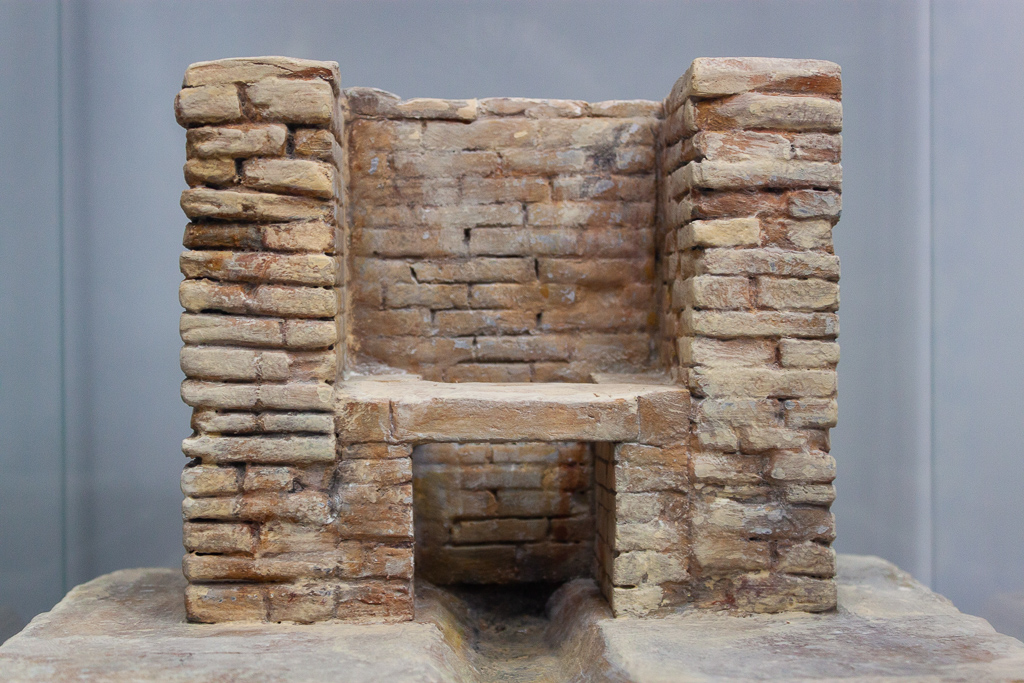
    What can you expect as you take a tour through toilet history? You’ll see what toilets looked like 5000 years ago, learn how public toilets became places to socialize and make deals, and view a toilet built on sketches from  Leonardo da Vinci himself. It doesn’t stop there – you’ll also spot old porcelain chamber pots, read about the invention of toilet paper in China, be treated to some interesting works of art, and what’s more, get a glimpse of more than 600 knick knacks all related to the great commode.

    After you buy your ticket, a guide will take you through the exhibit, briefly telling you about each one and answering any questions you might have. It’s hard not to giggle when you find out that a man who significantly contributed to the advancement of toilet technology had a name like Thomas Crapper. After the tour, you’ll watch some short and humorous clips that instruct you on how to properly position yourself when you use the facilities, as well as a review of some funny toilets around the world.

    This is what Leonardo da Vinci’s toilet looked like – it even had flushing capability! He built this contraption at the request of a European royal. Only the king who requested the toilet, went with this more regal option instead.

    As you see, toilets progressed over time to what they are today.

    Toilets As Art At The Museum of Toilet History

    After you’ve completed the historical part of your tour, you’ll come to the section featuring toilet themed artwork.

    A Souvenir Collection At The Museum Of Toilet History

    Last but not least, you’ll have a chance to peruse the loads and loads of toilet-themed souvenirs like magnets, ashtrays, soap dispensers, and more.

    A Virtual Tour Of The Museum

    Watch and share this video for a recap of the Museum Of Toilet History in Kyiv and then subscribe to my Youtube channel for even more travel-related videos. I’d also suggest checking out this video.

    Would you visit the Museum Of Toilet History? Are there any other weird and offbeat things you recommend seeing in Kyiv? Let us know in the comments.

    Location

    Museum of Toilet History
    Рибальська вул., 22, Kyiv, Ukraine, 01011
    +380 44 499 3161
    http://museumtoilet.com.ua/en/

    Good To Know

    1) The museum is open daily from 10:00 – 18:00. A visit shouldn’t take you more than 60 – 90 minutes.

    2) A regular ticket will fetch you 50 грн (UAH), less than €2. The price includes access to the museum, a guided tour, and some short video clips about toilets. You’ll need to pay in cash, as they don’t accept electronic forms of payment. You can also take pictures in the museum and there is no extra fee to take photos. 

    3) Tours are given in different languages, including English. All major pieces throughout the museum have an accompanying English description as well. 

    4) The museum is close to the Klovskaya metro station.

    5) You can find The Museum of Toilet History on Facebook, Twitter, and YouTube.

    6) If you need somewhere to stay in Kyiv, take a look at your options on booking.com.

    7) If you like unusual places, read these other blog posts:

    *Disclosure – This post contains some affiliate links. If you book a tour or hotel, I’ll earn a tiny commission at no extra cost to you. Thanks for your support!